Architecting Agility: Elevating Enterprise Potential through Modular Agent Design

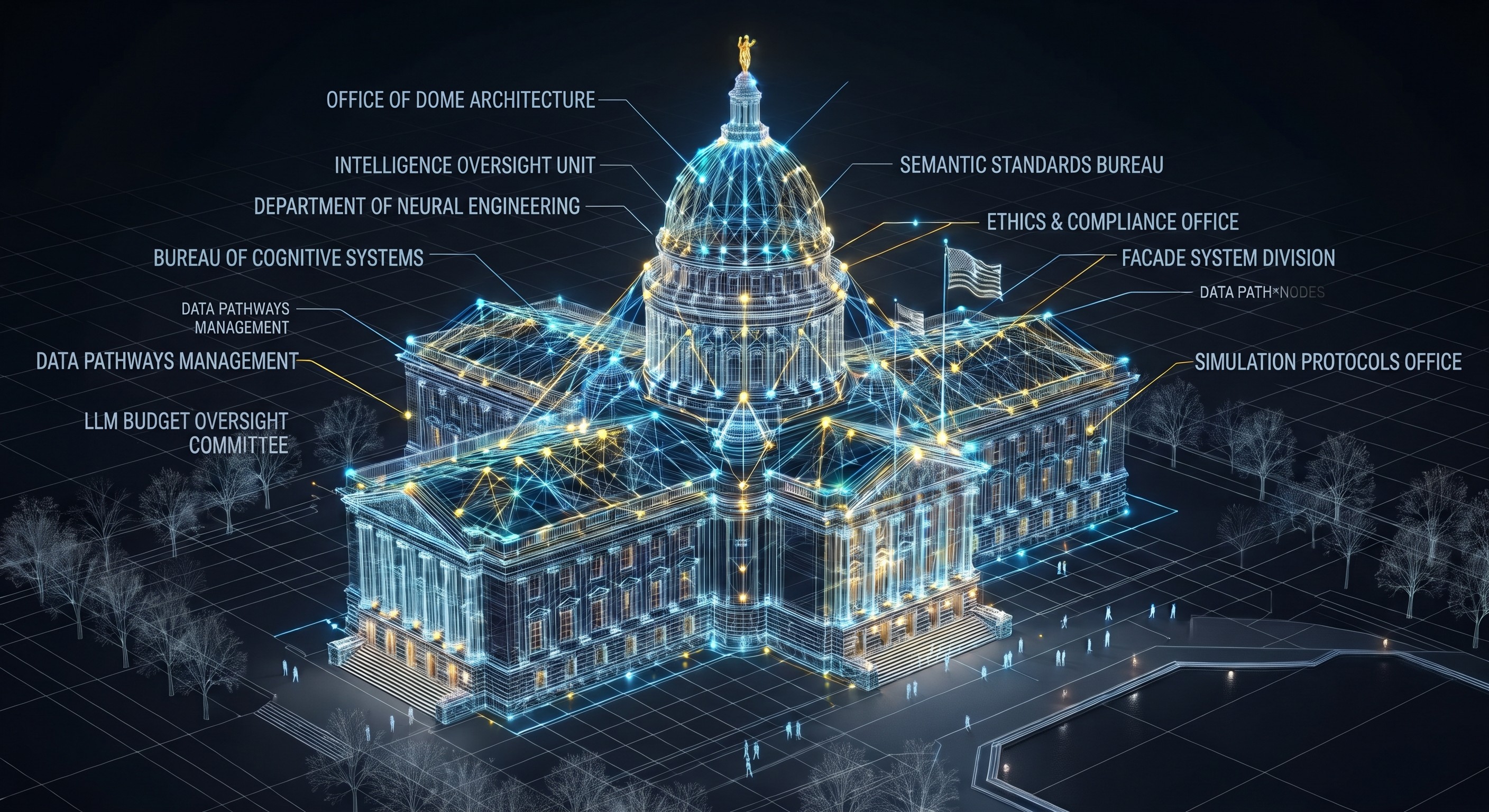
We are currently operating at a unique inflection point in industrial incubation, where the boundary between pilot experimentation and enterprise-wide transformation is dissolving in real time. The “AI-first” moment mirrors the arrival of the Gutenberg Press: where we have moved beyond the “hand-copied” era of manual processing into a period of radical scalability. Across the globe, organizations are racing to harness and maximize the potential of Generative and Agentic AI in all facets of their business. Many enterprise leaders have moved past exploration and are now integrating AI into core business functions. This surge is exhilarating; it represents a collective leap toward a more productive future. However, for many, that excitement is tempered by a persistent, quiet anxiety: “Are we doing this right, or are we just playing catch-up?” The conundrum of where to start often leads to the “Enterprise AI Trap”, where one may approach AI agents and processes in monolithic, all-encompassing projects that are too heavy to pivot and too slow to deliver. And this isn’t due to resistance to innovation, but rather a symptom of a high-performance culture attempting to maximize ROI through sheer precision. It is easy to empathize with the pursuit of a flawless first prototype. However, in the agentic era, this pursuit of the ‘perfect solution’ can inadvertently lead to structures that are too heavy to pivot and too slow to deliver.
Whenever I find myself navigating this complexity, my mind goes back to my undergraduate days in Aerospace Engineering. I can still hear my Statics professor shouting, “Draw the damn diagram!” He knew that you cannot solve a complex structural problem until you see the overall flow of forces. Similarly, my early days coding in Fortran 90 taught me a lesson that remains relevant for AI-powered transformation today: the power of repeatable, specialized modules. To build AI that actually works, we have to stop looking for a “brain” and start drawing the system. It may seem counterintuitive, but let’s understand this via the following three pillars.
Pillar 1: The Systems Engineering Lens
You need good ingredients to create the perfect dish, so the same logic should apply to AI, right? Not quite! The foundation (the first step) of effective agentic AI is not gathering “launch-ready”, polished content blocks; it is structural logic. As highlighted in a 2026 architectural analysis of Agentic AI, the most reliable systems are those designed to handle workflows that exceed the “reliability envelope” of a single model call. To succeed, we must return to the “diagram” and apply two foundational engineering concepts: Recursive Logic and Subroutines.
In Aerospace, a flight control system doesn’t just “fly the plane.” It executes a Recursive Logic loop: measure pitch, compare to the target, adjust flaps, and repeat. Business agents must do the same. Rather than a one-off prompt, we need loops of continuous algorithmic reasoning. By breaking business processes into discrete subroutines, much like those coding modules, we constrain the AI’s operational boundary. This is objective and technical: it limits hallucinations and establishes the predictability required for true enterprise-grade productivity.
But wait! What happens when the market shifts? If the content feeding the agent changes, or if we suddenly require a different output format, are we doomed to the arduous human process of ‘unlearning the old’ to ‘learn the new’? Not quite - in a modular architecture, the “logic layer” (the Parent/Orchestrator) is decoupled from the “knowledge layer” (the data/content) and the “inference layer” (the LLM). In simple terms, if the logic flow is sound, just replacing the “brain” or even switching entire modules won’t derail your entire agent.
Pillar 2: “Velocity” vs “Slow and Steady”: Understanding Model Obsolescence
The “Enterprise AI Trap” is often a “Waterfall Trap.” In traditional engineering, this approach ensures safety, but in the AI race, its sequential nature is a revenue risk. Long, sequential AI projects can accumulate technical debt and miss the pace of model change.
When an organization spends 12 months building a monolithic AI system, they are effectively building a museum piece. Foundational models now evolve quarterly. If your deployment cycle is longer than a model’s release cycle, you face Model Obsolescence before you even hit “Enter.” To protect the bottom line, your architecture must be built for velocity, enabling rapid, “swappable” integration of new capabilities without collapsing the entire structure.
It is important to clarify here: moving with velocity is not an invitation for half-baked execution. Rather, it is a shift from “sequential” to “parallel” development. By decoupling the logic structure from the underlying content, you aren’t cutting corners; you’re simply building the tracks and the train at the same time. When the logic isn’t hostage to the specific data it processes, you don’t have to wait for the perfect dataset to begin architecting the perfect flow.
Pillar 3: The Modular Solution: Parent-Child Architecture
The solution lies in the very modules I first encountered in those early coding labs. McKinsey’s 2026 State of Organizations report emphasizes that value is found when we “reimagine how work gets done” through modularity.
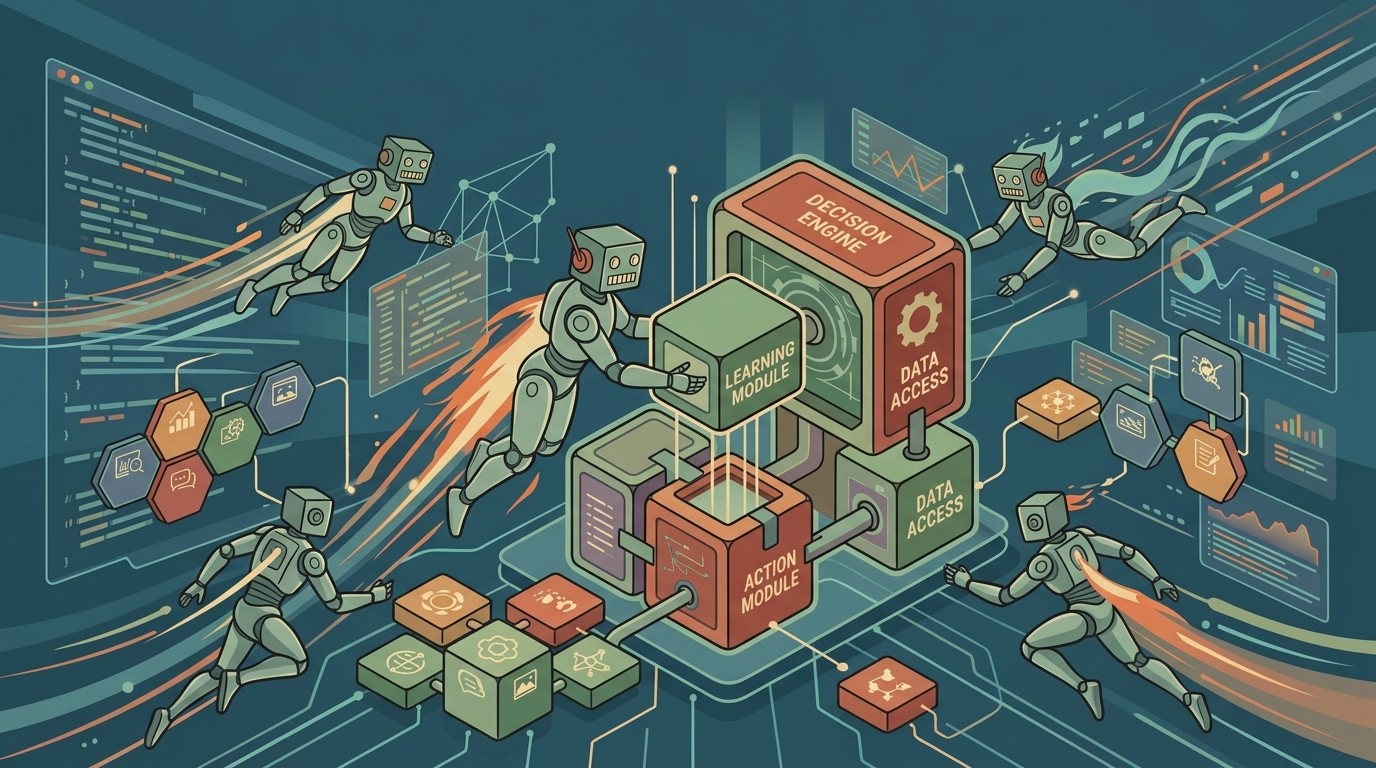
For AI Agents, this is achieved via a Parent-Child Agent Architecture.
The Parent (The Orchestrator): Think of this as the “Director” or the overall system diagram. It understands the high-level objective and manages the flow.
The Children (The Sub-agents): These are specialized, repeatable modules designed for specific tasks.
If your organization updates its sales methodology, for instance, moving to a MEDDPICC or Value Selling framework, you don’t need to “retrain” your entire enterprise AI. You simply update the specific “Child” module responsible for deal qualification. This modularity isolates risk and ensures that as technology evolves, you aren’t rebuilding your foundation; you’re just swapping your ingredients. It’s the only way to ensure that business productivity stays ahead of the curve.
The era of Agentic AI-powered scalability isn’t coming; it’s being architected right now by those willing to “draw the damn diagram” and think in systems. As we move from pilot projects to modular ecosystems, I’m curious: how are you balancing the need for institutional rigor with the imperative for high-velocity deployment? What are the ‘repeatable modules’ that have been game-changers in your own AI journey? Drop a comment below with your thoughts on how we can rewire the enterprise for a future of continuous evolution.
References:
Industry & Market Research
McKinsey & Company: The State of Organizations 2026 Read the Full Report
McKinsey & Company: 2026 Global AI Survey Explore the Data
Scholarly Papers
Agentic Artificial Intelligence (AI): Architectures, Taxonomies, and Evaluation of LLM Agents Link to arXiv:2601.12560
Beyond pass@1: A Reliability Science Framework for Long-Horizon LLM Agents Link to arXiv:2603.04561
Professional Community Resources
Sales Enablement Collective: GTM & AI Integration Visit the SEC Resource Hub